Text or Die
- 4.1
- Rating
- 10.00M
- Installs
- Free
- Price
 Analysis by App-foxy
Text or Die is a trivia game built around one deceptively simple skill: finding a long answer quickly. I found that its real appeal is not merely knowing facts, but choosing answers that give me enough protection to survive the next hazard. That small change turns ordinary word trivia into a tense decision game where accuracy, spelling, timing, and word length all matter at once.
Developed by Rollic Games, it is free to play and aimed at players aged Everyone 10+. The game has reached over ten million installs, with an average rating of 4.1 from around 285 thousand ratings. Those numbers make sense to me after playing: the basic idea is immediately understandable, rounds are easy to start, and the competitive pressure appears before I have time to overthink the rules.
Why the longest-answer mechanic changes trivia
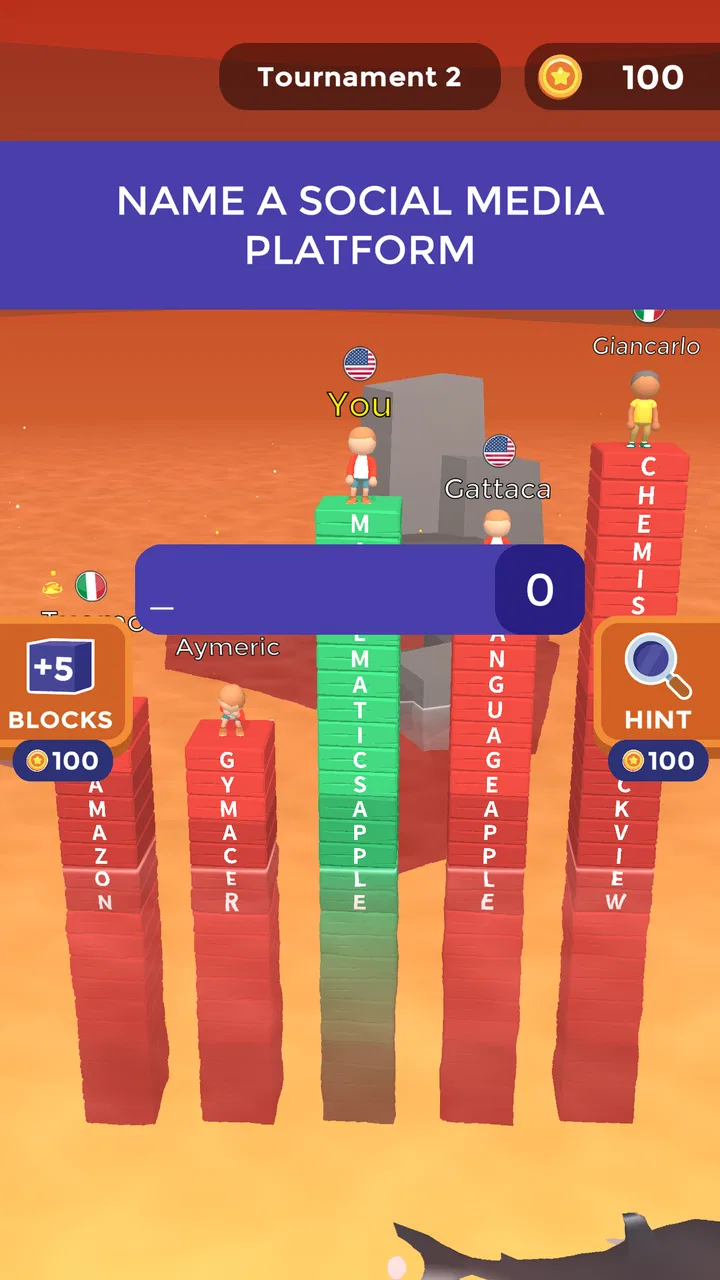
The central capability is answer selection under pressure. Instead of treating every correct response as equal, the game rewards me for typing the longest valid word I can think of. A short answer may be correct, yet still leave my character vulnerable. A longer answer can create a stronger position, so the best move is often not the first fact that comes to mind.
You May Also Like

 AccuWeather: Weather Radar
AccuWeather Review: A Quick, Clear Forecast for Everyday Decisions
For everyday plans, the best forecast is the one you can understand quickly. AccuWeather makes rain timing, radar, and local conditions easy to act on, with a few trade-offs.

 Hill Climb Racing
Why Hill Climb Racing Still Turns Crashes Into One More Run
A tiny car, a bumpy hill and one more upgrade: Hill Climb Racing keeps resurfacing because its simple chaos makes every near-miss feel personal.

 AliExpress - Shopping App
AliExpress Makes Global Shopping Feel Personal, but Shoppers Bear the Risk
AliExpress turns a global marketplace into a pocket-sized discovery engine. Its reach is useful, its shopping loop compelling, and its trade-offs easy to miss.

 Lords Mobile: Kingdom Wars
Lords Mobile Is a Kingdom-Building Routine, Not a Quick Match
A case-by-case verdict on the building, battles, device demands, and social commitments that make Lords Mobile rewarding for some players and exhausting for others.

 PDF Scanner app - TapScanner
TapScanner Makes Paperwork Easier to Capture, Check, and Share
TapScanner makes scanning with a phone feel less like a rescue operation and more like a dependable step in getting work done. Its capture tools are useful, though not flawless.

 Block Blast!
 Shows How Much a Puzzle Game Can Leave Out
A quiet grid game shows why puzzle players increasingly value instant clarity, repeatable skill and low-pressure play—and where the genre still needs to catch up.
More From Our News Desk
View All News


That distinction gives each prompt two layers. First, I have to understand what the question is asking. Then I have to search my memory for a suitable answer with more letters. In a conventional trivia game, I might answer “cat” and move on. Here, I may pause to consider whether a more specific animal, breed, or related term fits the wording. The game therefore tests vocabulary and flexible thinking as much as recall.
The useful skill is not simply knowing more answers; it is learning to recognize when a longer answer is safely acceptable. That is where the game becomes more interesting than a basic quiz. A very unusual word may be longer, but if it does not clearly match the prompt, relying on it feels risky. A familiar, slightly longer answer is often the better practical choice.
The texting-style input supports that focus. The interaction feels closer to sending a quick message than filling out a formal quiz sheet, which keeps the rounds approachable on a phone. I do not need to study a complicated interface before playing. The challenge arrives through the prompt itself and the limited time available to form an answer.
Typing is part of the strategy
Because answers are entered as words, spelling becomes an important part of the experience. I can know the right concept and still lose value if I hesitate over its spelling or choose a word that does not fit the question precisely. This makes the game especially revealing for players who have strong general knowledge but tend to freeze when asked to produce an answer quickly.
I found it helpful to think in categories rather than isolated facts. When a prompt asks for a type of food, place, animal, or object, I mentally scan the category for longer examples instead of stopping at the first obvious response. This habit improves my decisions without requiring outside tools or preparation. It also makes the game feel more active than passive trivia, since I am generating possibilities rather than recognizing one answer from a list.
That approach has a trade-off. Searching for an ambitious answer can consume the time needed to submit a safe one. The game rewards confidence, but it also punishes needless overthinking. My strongest rounds came when I quickly identified a dependable answer and extended it only when a longer option appeared naturally.
How a round feels in practice
A typical session works best when I treat every prompt as a small risk calculation. I first decide what the question definitely allows, then compare a short answer that I know with a longer answer that I can spell confidently. If the longer option is too uncertain, I prefer the dependable choice. That decision happens repeatedly, so even familiar questions can feel different depending on my mood and concentration.
The survival framing gives those choices visible consequences. I am not just collecting correct responses in a quiet list. I am trying to remain safe while the other players and the surrounding threat create pressure. That presentation makes a simple word task feel more urgent, particularly when I have already built a good position and do not want to throw it away for one extra letter.
One practical tip is to avoid treating the longest possible answer as automatically best. Specificity matters. If the prompt has a narrow meaning, a long word that only loosely relates to it may be a poor choice. I get better results by asking myself whether another player would immediately understand why my answer belongs in that category.
Another useful habit is to keep common long words ready in broad mental groups. I do not mean memorizing a fixed answer sheet, because prompts can vary and rigid memorization can make me miss a better response. Instead, I build familiarity with longer everyday nouns, place names, foods, animals, and activities. That gives me a wider starting point when the timer begins.
The best everyday scenario
The game fits short breaks particularly well. I can imagine opening it while waiting for a friend, sitting on public transport, or taking a few minutes away from work. The premise is understandable without a tutorial-heavy commitment, and the individual decisions are small enough that I can play casually. It is also easy to hand to someone nearby and explain: answer the prompt, aim for a long word, and try to stay ahead of the danger.
It works especially well as a light social challenge. Two people can compare how they interpreted the same prompt and laugh at the different answers they considered. A player who enjoys word games may focus on length and spelling, while a trivia fan may focus on finding precise facts. That mix creates conversation even when the game itself remains simple.
I would not choose it for a serious study session. Although it exercises recall and vocabulary, its goal is entertainment rather than structured learning. It does not replace a dedicated quiz app for subject practice, nor does it offer the same depth as a traditional trivia game organized around history, science, sports, or geography. Its strength is the pressure of producing a useful word, not teaching a curriculum.
It is also a better fit for players who enjoy quick decisions than for people who dislike timed input. If I want to calmly research an answer, compare explanations, or learn why something is correct, this is not the right format. The game turns knowledge into a fast contest, and that can be exciting or frustrating depending on what I expect from trivia.
Where it differs from ordinary trivia alternatives
Most trivia games make correctness the main finish line. A correct answer usually earns the same basic reward whether it is short or long. Here, word length changes the value of the answer, so I have to think about wording rather than only truth. That gives Text or Die a distinct identity within the trivia category.
It also differs from classic word puzzles. In a crossword or an anagram game, the structure of the puzzle usually narrows the solution. In this game, the prompt opens a category and I choose how far to explore it. That freedom is enjoyable, but it can also expose gaps in vocabulary more directly. I may understand a topic yet struggle to produce a long example quickly.
Compared with a standard quiz app, this game is less satisfying for players who want explanations and more satisfying for players who want immediate consequences. Compared with a pure word game, it offers more context because the prompt asks me to connect a word to a subject. The best audience is therefore somewhere between trivia fans and casual word-game players.
Trade-offs that become clear after repeated play
The strongest part of the design can also become its main limitation. Once I understand that longer words are valuable, some prompts may begin to feel like searches for the biggest acceptable answer rather than genuine trivia questions. The variety of the prompts matters a great deal because the core action remains consistent: read, think, type, and protect my position.
There is also a difference between a clever answer and a practical answer. A player with a broad vocabulary may have an advantage, but speed and spelling can offset that advantage. Someone who knows fewer obscure terms may still perform well by choosing familiar answers quickly. I like that balance, although it means the result does not always measure pure knowledge.
The free entry point is convenient, but optional purchases are part of the experience, ranging from $0.99 to $24.99 per item. I would approach those purchases carefully. The game is easiest to recommend when treated as a casual free download rather than something that needs spending to be enjoyable. Anyone sensitive to in-app purchase prompts should decide in advance whether they intend to buy anything.
The current version is 30.0.1 and it runs on Android 7.0 or later. That makes it accessible to many older Android devices, though actual comfort will still depend on the phone’s screen, keyboard, and general responsiveness. Since typing is central, a cramped or unreliable keyboard can affect the experience more than it would in a game based mainly on tapping.
The age guidance of Everyone 10+ is worth keeping in mind for families. The concept is easy to understand, but the competitive survival presentation may appeal more to older children, teenagers, and adults than to very young players. I would consider the child’s comfort with timed competition and word-based pressure rather than looking only at the simple cartoon-like premise.
Small techniques that improve performance
My first technique is to separate “long” from “complicated.” A long answer made of familiar letters is often more useful than a rare word that I cannot type confidently. I try to favor answers that are clearly connected to the prompt and easy to verify mentally. This reduces the chance of wasting time correcting a spelling mistake.
Second, I watch for prompts that allow subcategories. If the wording asks for a broad group, I search for a specific member with a longer name. For example, I would not stop at a general category if a well-known example fits naturally. The important qualification is that the answer must remain clearly relevant; stretching the interpretation can cost more than it gains.
Third, I use the opening seconds to establish the category before chasing length. When I misunderstand the prompt, every later thought is wasted. A quick, accurate reading gives me a better foundation than immediately typing the first long word that comes to mind. This is particularly useful when a question could be interpreted in more than one everyday way.
Finally, I change my risk level depending on my position. If I am already safe, I may try a longer answer. If I am behind or uncertain, I prefer a word I can submit without hesitation. This makes the game feel less like a vocabulary test and more like managing a series of small bets.
Who will enjoy it most
I recommend it to players who like word association, quick trivia, and light competitive tension. It is a good choice for someone who wants a game that can be understood immediately but still rewards practice. The improvement is not only about learning more facts; it comes from becoming faster at scanning categories, judging relevance, and typing confidently.
It is also appealing for people who enjoy discovering how differently others think. Two players can receive the same prompt and produce answers from completely different parts of their vocabulary. That makes it suitable for casual group play, even when nobody considers themselves a serious trivia expert.
I would skip it if my priority is deep educational content, carefully explained answers, or a relaxed puzzle with no time pressure. Players who dislike typing on a phone may also find the main mechanic more tiring than entertaining. Likewise, anyone looking for a broad collection of distinct mini-games may find the repeated longest-word structure too narrow.
For me, the game succeeds because it gives one familiar action a meaningful twist. I am not merely trying to be right; I am trying to be right in the most useful way, while staying quick and precise. That focus keeps the rounds readable and makes small vocabulary decisions feel surprisingly important.
My final recommendation is to try it as a short-session trivia game, not as a replacement for a full quiz library. Its free price makes experimenting easy, and the large player base shows that the concept has broad appeal. Just remember that the best performance comes from sensible, clearly relevant words rather than desperate attempts to produce the longest possible answer. If that balance between knowledge and risk sounds fun, Text or Die is worth adding to your casual game rotation.
FAQs for Text or Die
01What is Text or Die, and how does the gameplay work?
Text or Die is a casual multiplayer word game in which players compete by answering questions with words or phrases. The longer your answer is, the more blocks your character receives, helping you build a taller platform and stay above rising water. The game combines quick thinking, vocabulary, and strategy, because a short answer may leave you vulnerable while an unusual answer may not be accepted.
02Can I play Text or Die without an internet connection?
Text or Die is mainly designed around online matches and requires an internet connection for its multiplayer features, advertisements, and certain game services. While some screens or previously loaded content may open temporarily offline, you should not expect the full experience to work without connectivity. A stable connection is recommended to avoid delays, failed submissions, or interruptions during a round.
03Is Text or Die free to download and play?
Yes, Text or Die is generally available as a free-to-play game on supported mobile devices. You can progress through matches without paying, but the experience may include advertisements and optional in-app purchases. These purchases can provide cosmetic items, bonuses, or other conveniences, depending on the current version. Always check the store listing for the latest pricing and purchase details.
04Is Text or Die suitable for children?
Text or Die has simple controls and colorful presentation, making it easy for many younger players to understand. However, parents should review the app-store age rating and consider the presence of online interactions, advertisements, and optional purchases. Because answers may come from a broad question pool and the game connects to online services, parental supervision and purchase restrictions may be appropriate for children.
05What should I know about advertisements and in-app purchases in Text or Die?
The free version of Text or Die may display advertisements between or around gameplay sessions, and some optional rewards can involve watching ads. In-app purchases may also be available for players who want additional items, advantages, or customization options. The exact offers can change after updates, so review the current store description and your device’s purchase settings before downloading or allowing spending.
Pros
- Simple controls make it easy to start playing quickly.
- Short rounds are convenient for quick gaming sessions.
- Character and block customization adds a personal touch.
- Competitive rankings encourage replaying and improving.
- The game works well for casual players of different ages.
Cons
- Some answers may feel repetitive after extended play.
- Progress can become heavily dependent on knowing obscure words.
- Ads may interrupt the experience
- especially between rounds.
- Online competition can feel uneven when players have different skills.
- Limited strategic depth may reduce long-term appeal for some players.

Text or Die
Gallery